Heating Your Greenhouse
Heating a greenhouse is a far more complex task than what you might at first imagine. There are numerous factors which need to be taken into consideration in order to heat a greenhouse to the right temperature for the prosperity of your plants and crops.
The main 5 factors to take into account when it comes to greenhouse heating are:
- The nature/species of plants you wish to protect
- The area in which you live, i.e. the propensity to frost and the outdoor temperature in your area
- The availability of power within your greenhouse
- Whether or not you have tropical and tender plants
- The size of your greenhouse
We will go through these points in detail below, to help you understand how to heat your greenhouse in the right way.
The Type of Plants You Have
Points one and four do overlap, with the temperature required in your greenhouse very much linked to the types of plant and crop that you have.
Generally, it is important to ensure that your greenhouse remains above 3 degrees Celsius at all times in order to remain frost free. This can be a particular challenge in the winter months without the right greenhouse heating equipment.
However, different plants and crops thrive at various temperatures. A little bit of internet research never fails to help in this regard with tender plants like pelargoniums needing to remain above 7 degrees Celsius at all times. Tropical and tender crops like tomatoes meanwhile always require a minimum temperature of 10 degrees Celsius.
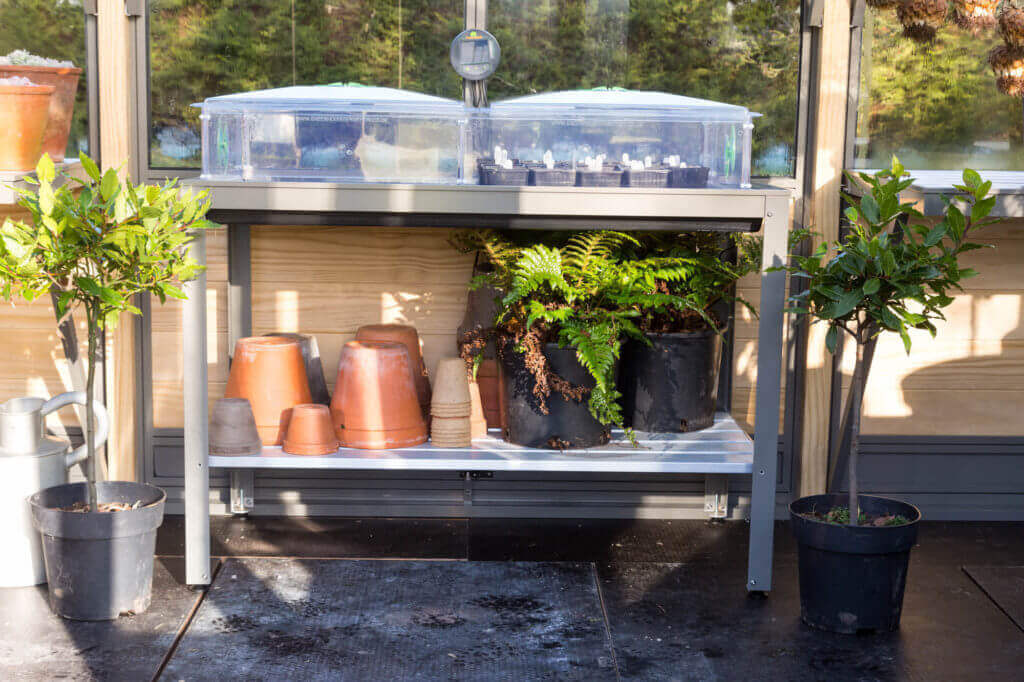
Purchasing a number of thermometers is recommended in order to monitor the temperatures being experienced by each of your plants in different sections of your greenhouse. These required varying temperatures can be reached by having the right greenhouse equipment. Heated propagators and carefully positioned heating systems are both good ways of achieving this.
The Area in Which You Live & Size of Your Greenhouse
In the North of the UK or in frost pockets, it is strongly recommended that greenhouse heating measures are put in place to protect your plants.
In instances where greenhouse heating is required, the energy required will naturally differ depending upon the greenhouse size that you have.
Based on our experience, we have found that in instances where the outside temperature is approximately -3.5 degrees, one of our 8 x 10 foot greenhouses will require some 2kw/h of power in order to maintain a constant internal temperature of 10 degrees. Larger constructs will naturally require more energy in order to achieve the same temperatures.
The Availability of Power
When you are planning out your own made to measure greenhouse with Cultivar, we strongly recommend that you take the availability of electric power into consideration.
You should always plan to base your greenhouse within close distance of a power supply. Alternatively, given that you may be planning a greenhouse from scratch, why not employ the services of a qualified electrician to add a direct power supply into your greenhouse?
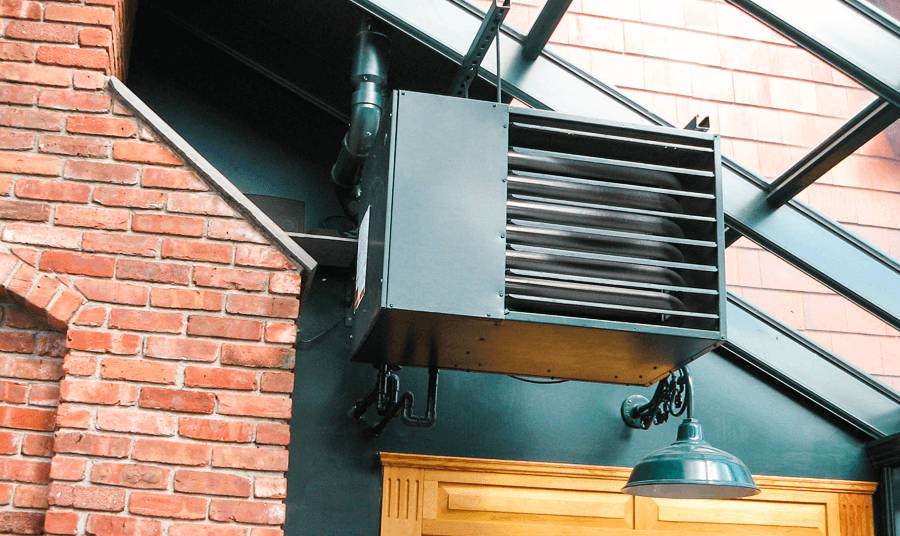
There are a number of reasonably priced electrically powered fan heaters of varying power and facility available to purchase. These can be floor or roof mounted in a place which is convenient so long as it is not near water sources or where significant watering takes place. The fan facility has the added advantage of improving air circulation, of particular benefit to plants during the summer months.
There are lower wattage heaters such as tubular heaters that will provide sufficient heat to cut the affects of frost. Propane heaters are also effective; once again they are available in different outputs for different uses.
Finally paraffin heaters are still available and although they may be temperamental they do offer heating without the necessity to introduce power into the greenhouse.
Quality levels will naturally vary depending upon the manufacturer, so do your research beforehand to make sure you are purchasing the right model to provide the greenhouse heating that you need.
Based on our experience, we would personally recommend Biogreen.co.uk and hotboxworld.com as reputable sellers to take into consideration. Both of these suppliers have retailers and distributors that offer their products across the UK.
Choosing the Right Heater for Your Greenhouse
The type of heater you choose should match the minimum temperature you need to maintain rather than the maximum output available. For frost protection only, a low-wattage tubular heater running along the base of the structure is usually enough.
For tender or tropical plants that require 10°C minimum through winter, a thermostatically controlled fan heater in the 2kW range is the practical standard for an 8 x 10ft greenhouse. Fan heaters have a secondary benefit: the airflow reduces the still, damp conditions that encourage botrytis and fungal disease, which matters particularly in winter when ventilation is reduced.
Always position any heater away from water sources and direct watering areas, and run the cable through a conduit laid under the base during construction. If you are still in the planning stage, our base preparation guide covers how to plan for services including electric supply.
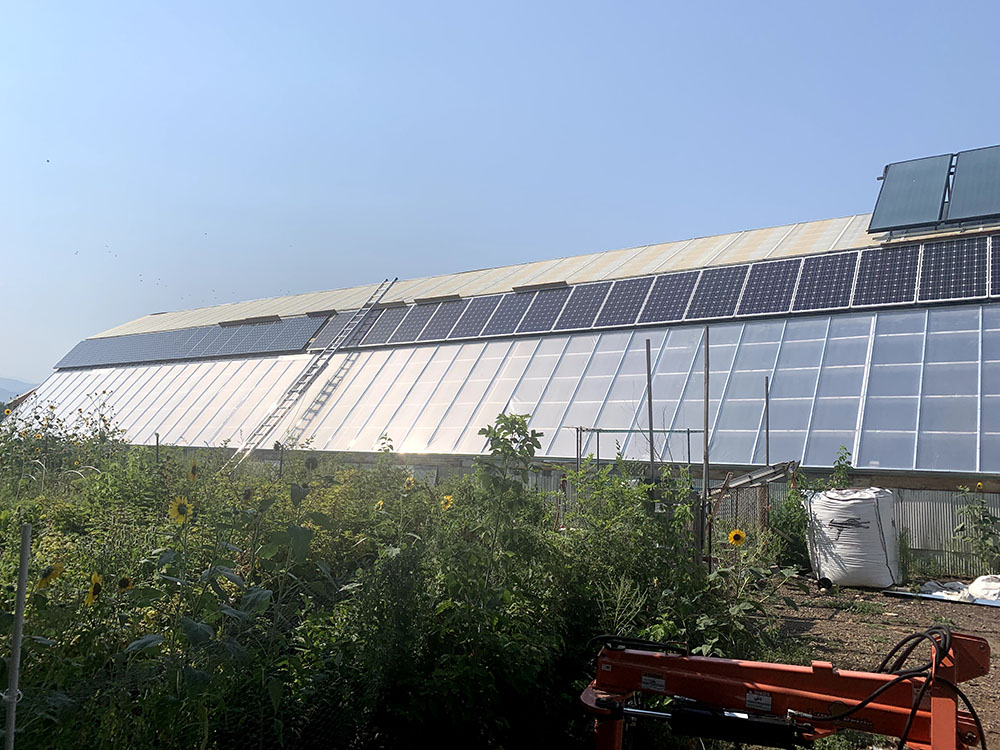
A solar heater is an appealing option for gardeners who want to reduce running costs, and it works best as a supplement to an existing heating system rather than a standalone solution in the UK climate. Solar-powered heating units store energy during daylight hours and release it overnight, which can take the edge off cool spring and autumn nights without any electricity cost. Their limitation is output: on overcast winter days, which are the days a greenhouse most needs heat, a solar heater alone will not maintain the minimum temperatures that tender or tropical plants require. The most practical approach is to use a solar heater alongside a thermostatically controlled electric fan heater, with the solar unit reducing the number of hours the electric heater needs to run. This combination keeps running costs down without compromising plant safety on the coldest nights.
Greenhouse Heating FAQs
The absolute minimum for a frost-free greenhouse is 3°C. This protects the majority of hardy and half-hardy plants through a UK winter. Tender plants like pelargoniums need a minimum of 7°C, and tropical crops like tomatoes require at least 10°C. A thermometer at plant level, not at the heater, is the most reliable way to monitor this. See our full guide on what to grow and the temperatures each crop requires.
For an 8ft x 10ft greenhouse in typical UK winter conditions with an outside temperature around -3.5°C, approximately 2kW/h is required to maintain an internal temperature of 10°C. Smaller greenhouses need less; larger ones more. A thermostat prevents the heater running constantly and keeps running costs manageable.
Yes. Propane heaters and paraffin heaters both work without mains power and are available in outputs suited to small and medium greenhouses. Paraffin heaters in particular are reliable for frost protection only. The trade-off is that both require manual refuelling and neither can be thermostatically controlled as precisely as an electric unit.
They serve different purposes. A fan heater distributes warmth quickly and evenly and improves air circulation, which reduces fungal disease risk in winter. A tubular heater runs along the base perimeter, provides gentle background heat, and uses less energy. For growing tender plants a fan heater is more effective; for frost protection only a tubular heater is often sufficient and cheaper to run.
Away from direct watering areas and water sources, and never directly below staging where water drips regularly. A fan heater works best positioned at one end of the greenhouse at low level so warm air circulates the full length of the structure. All electrical connections should be routed through a waterproof conduit, ideally planned during base construction.
Yes significantly. A small greenhouse reaches temperature faster but loses heat faster too. A larger structure has more thermal mass and a more stable internal climate, but requires more energy to bring up to temperature on cold nights. Insulating the north-facing end with bubble wrap in winter reduces heat loss in any size.
Practical answers on keeping your greenhouse at the right temperature through a UK winter.