Greenhouse Sizes UK: Choosing Space That Works
Choosing between greenhouse sizes UK gardeners have a lot to think about. The right greenhouse should feel warm in February, be full by April, and still even fuller in July when trays, pots, tomato plants, tools, and watering cans all need space.
A greenhouse should make growing feel easier. It should protect plants, give you room to work, and sit naturally within the garden. A compact structure can be perfect for seedlings, herbs, cuttings, and tender pots. A larger one can be the better long-term choice when you want staging, tall crops, overwintering space, and flexibility for future seasons.
To work out the best UK greenhouse sizes start off by thinking how you will use it. Cultivar Greenhouses has a range of sizes so you can configure the structure to match your garden setting. But there’s also more to consider other than size such as : base, orientation, access, light, proportions, and everyday growing habits.
Start with the garden, not the catalogue
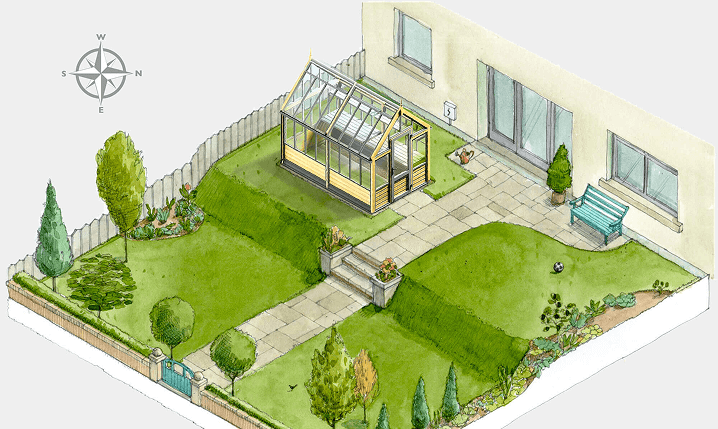
Before comparing standard greenhouse sizes, stand in the garden and look at how the space behaves. Notice where the sun reaches in the morning, where shade settles in the afternoon, and which areas feel easy to reach from the house. Fences, walls, trees, sheds, paths, patios, outdoor taps, and slopes can all affect the final choice.
A greenhouse may fit on paper and still feel awkward once installed. It needs room around it for cleaning, gutter access, maintenance, and airflow. If it is pushed too tightly against a hedge or fence, the usable space outside the greenhouse disappears.
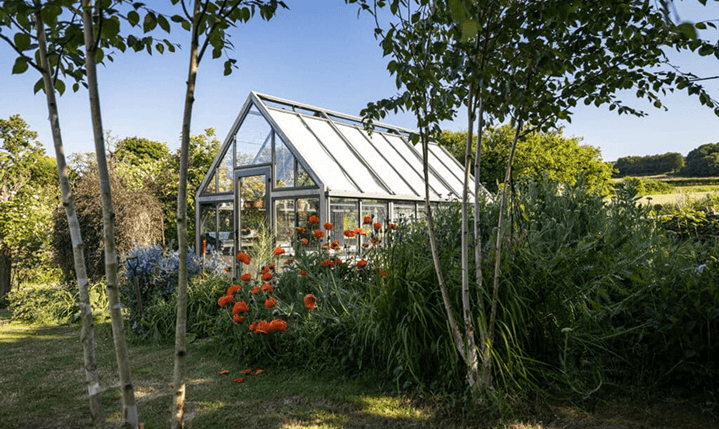
The best greenhouse sizes UK choices respect the shape of the garden. They leave enough room for the structure to breathe, while giving the gardener a space that feels useful rather than squeezed into a spare corner.
Think about the way you want to grow
Every gardener uses a greenhouse differently. Some want a protected space for seed trays, herbs, cuttings, and a few favourite plants. Others want tomatoes, chillies, cucumbers, salads, overwintered pots, and a place to work through the season.
Those uses need different kinds of space. Seed trays need staging and light. Tall crops need height, floor space, ventilation, and access for pruning. Overwintered plants need room to sit without blocking the path. A potting bench needs working clearance, not just a surface.
When comparing greenhouse sizes UK options, picture the greenhouse at its busiest. Can you water without brushing against plants? Can you reach the back of the staging? Can you move a pot without clearing half the path? Can you open vents and check plants without disturbing everything else?
A greenhouse should support the gardener as much as the plants. Growing becomes more enjoyable when the space gives you room to work properly.
Standard greenhouse sizes give useful reference points
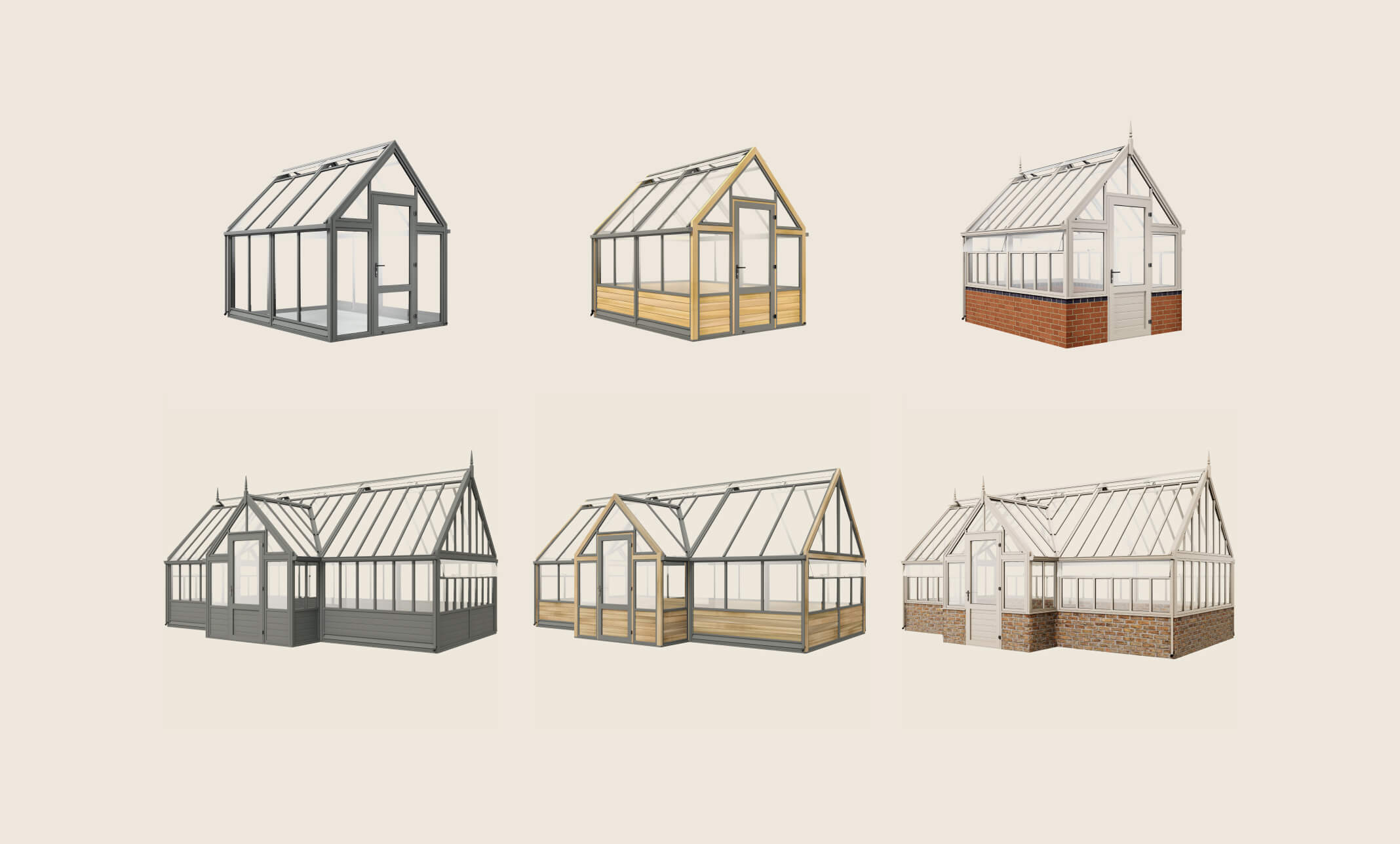
Standard greenhouse sizes help make the decision feel more manageable. They allow you to compare compact, mid-sized, and larger models without starting from guesswork.
A smaller greenhouse may suit a modest garden, seasonal growing, or a focused plant collection. A mid-sized structure often gives a comfortable balance between staging, crops, and movement. A larger greenhouse can support more ambitious growing, especially when you want zones for propagation, tall plants, storage, potting and perhaps even a potting area.
Still, standard greenhouse sizes do not tell the whole story. Width, length, height, door position, roof shape, staging layout, and surrounding clearance all affect how the greenhouse feels in daily use.
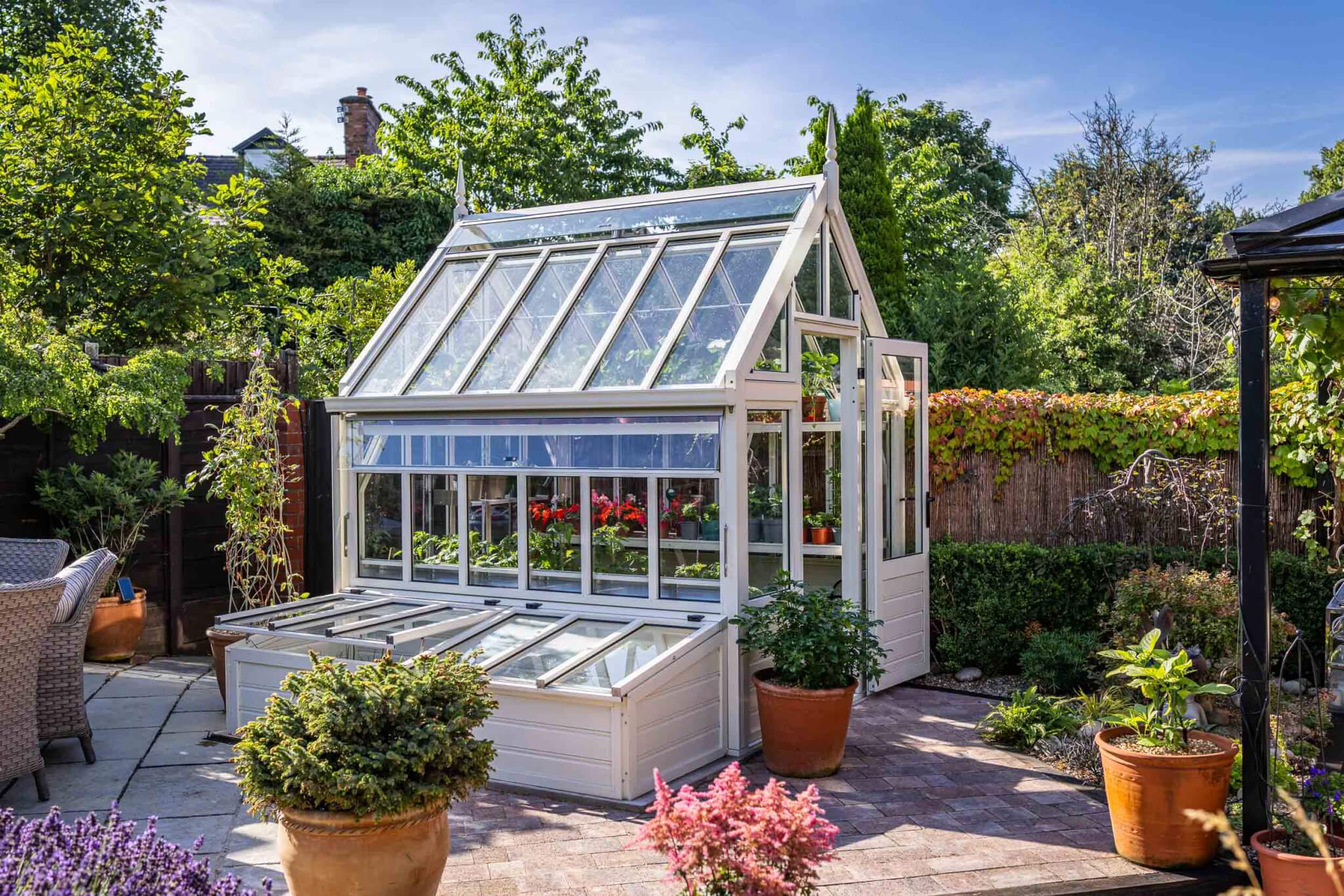
This is why greenhouse sizes UK decisions should not be made by the footprint alone. A greenhouse with clear internal flow can feel more useful than a larger structure with awkward access. A modest footprint can work beautifully when the path, staging, and planting zones are planned with care. Perhaps a smaller greenhouse with cold frames will work better for you.
Greenhouse sizes UK: plan around real greenhouse dimensions
Greenhouse dimensions matter most when you think about how you’ll use the space. External measurements help with the base and layout, but internal working space decides whether the greenhouse feels like a comfortable place to spend time.
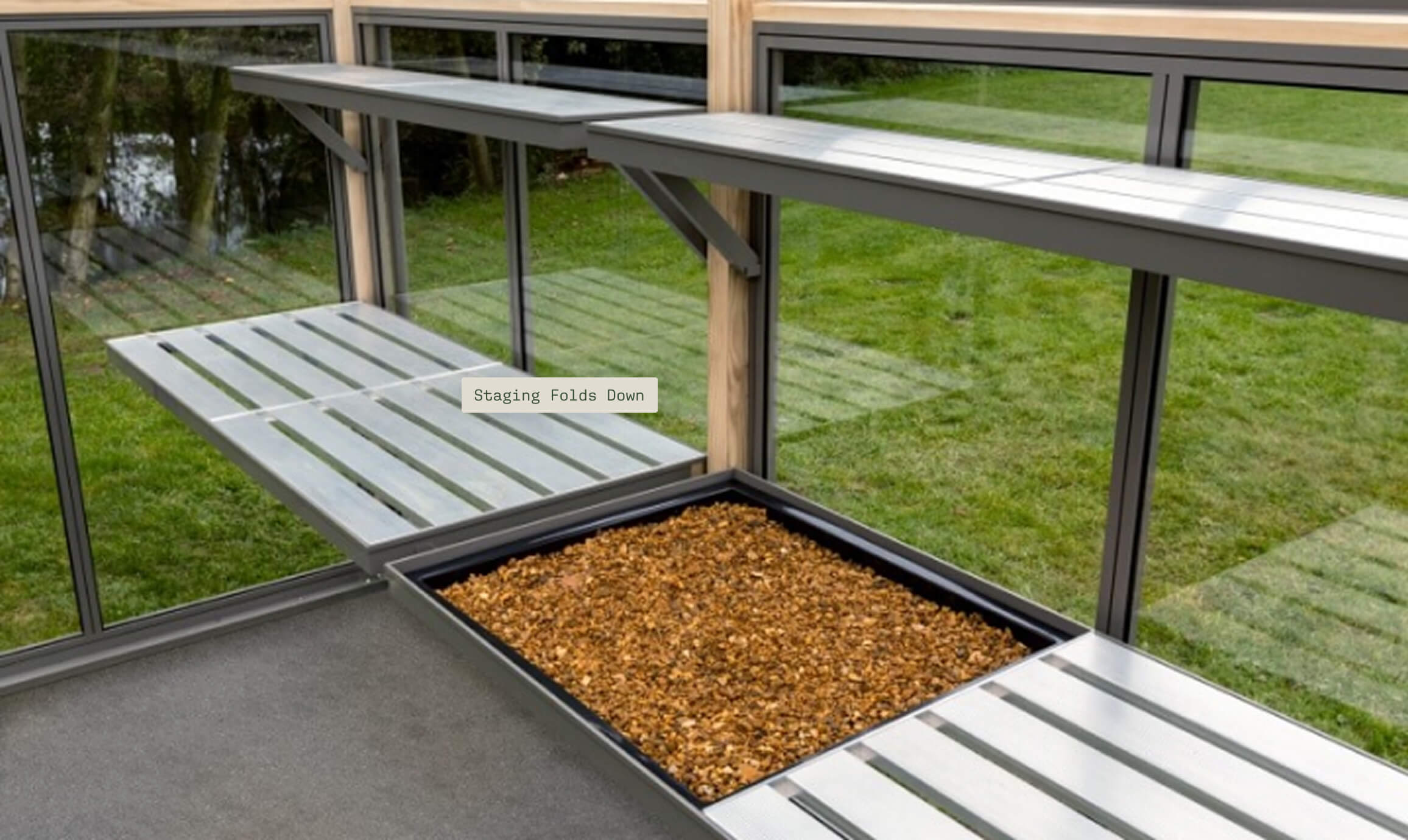
Start with the path. The walkway should make watering, carrying trays, and checking plants feel natural. Then look at staging depth. Staging that is too deep can be hard to reach. Staging that is too shallow may limit propagation. The staging on a cultivar greenhouse can be folded down so provide more height which is especially useful for tomatoes, cucumbers, hanging baskets, and taller plants.
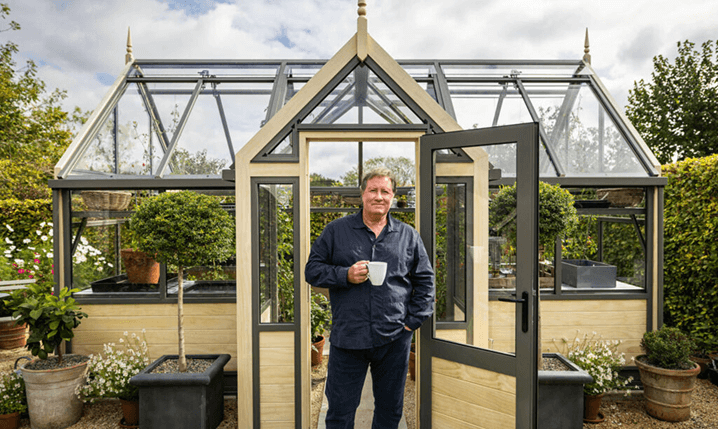
Door access is another practical detail. A wider entrance can make it easier to carry compost, larger pots, tools, and trays. If you plan to use containers, check that the door and internal path work together.
Strength and integrity are built in to a cultivar greenhouse and the sizes for the UK market can be adapted to suit. Look at the full experience: outside footprint, inside path, headroom, staging, planting space, access, and clearance. When these fundamental details align, the greenhouse will feel easier to use from the outset.
Let the base guide the final size
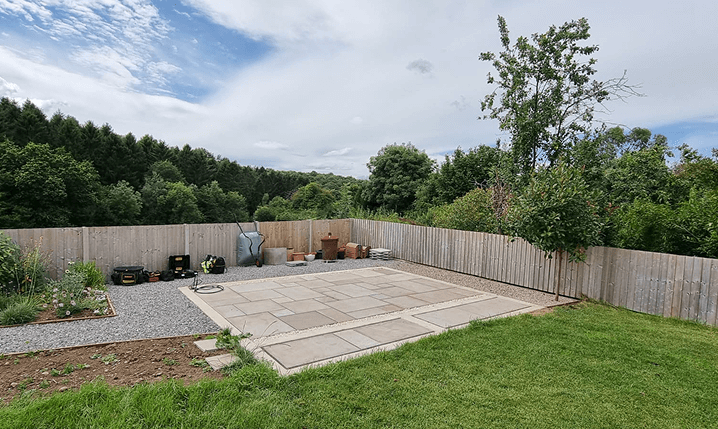
The base often reveals which greenhouse size is realistic. A stable, level base helps the greenhouse sit properly, drain well, look right, and perform over time. It also affects installation, flooring, utilities, and maintenance.
Before deciding on a final size, check the ground carefully. Is the site level ? Does water gather there? Is there a slope, old paving, lawn, gravel, root pressure, or uneven ground ? Can materials reach the area without difficulty? Will the chosen footprint still leave space around the structure?
A larger greenhouse may be worth the extra preparation if the site can support it properly. A smaller greenhouse may be smarter when the garden layout or ground conditions would make a bigger base feel forced.
Position can make a greenhouse feel larger or smaller
A well-positioned greenhouse often works harder than a bigger greenhouse in the wrong place. Light, shelter, access, and orientation shape how useful the space feels.
A bright site with easy access will usually be used more often. A shaded or distant corner may look suitable at first, then become inconvenient in daily life. If the greenhouse is close enough for quick checks, watering, ventilation, and winter visits, it becomes part of the garden routine.
Orientation affects light and warmth through the seasons. Nearby trees, fences, and buildings can create shade patterns that shift during the day. A greenhouse with good light and comfortable access may not need to be oversized. A larger greenhouse in a poor position may still feel limited.
Greenhouse sizes UK planning should happen alongside placement decisions. Cultivar’s greenhouse orientation guide gives useful support for that choice.
Greenhouse sizes UK: leave space for future growing
Many gardeners outgrow their first greenhouse faster than expected. A few trays become several crops. One tomato plant becomes a full summer routine. A single shelf becomes staging. A seasonal interest becomes a year-round habit.
This does not mean every garden needs the largest possible greenhouse. It means the chosen size should leave breathing room. A greenhouse that is already full in the first season may feel restrictive once your confidence grows.
Think one or two years ahead. You may want more varieties, earlier sowing, better overwintering, a potting bench, extra staging, or space for plants that need temporary shelter. A little extra room can keep the greenhouse enjoyable instead of cramped.
Choose greenhouse sizes UK gardeners can still enjoy when full
A greenhouse is practical, but it also becomes part of the garden view. Scale matters. The best choice gives enough room for plants and movement, while still respecting patios, borders, paths, seating areas, and views from the house.
Greenhouse dimensions, standard greenhouse sizes, base planning, orientation, and access all shape the final experience. The best greenhouse sizes UK gardeners choose usually come from looking honestly at the garden, the plants, the working space, and the way the structure will be used over time.
Choose a size that gives you room to grow, not just room to place a greenhouse. Think about the path, height, staging, door, base, light, and maintenance space around the outside. A greenhouse that supports those details will stay useful long after the first season.
With Cultivar Greenhouses, the decision is not only about measurements. It is about creating a greenhouse that fits the garden, works beautifully in daily use, and feels worth its place year after year.
Frequently Asked Questions
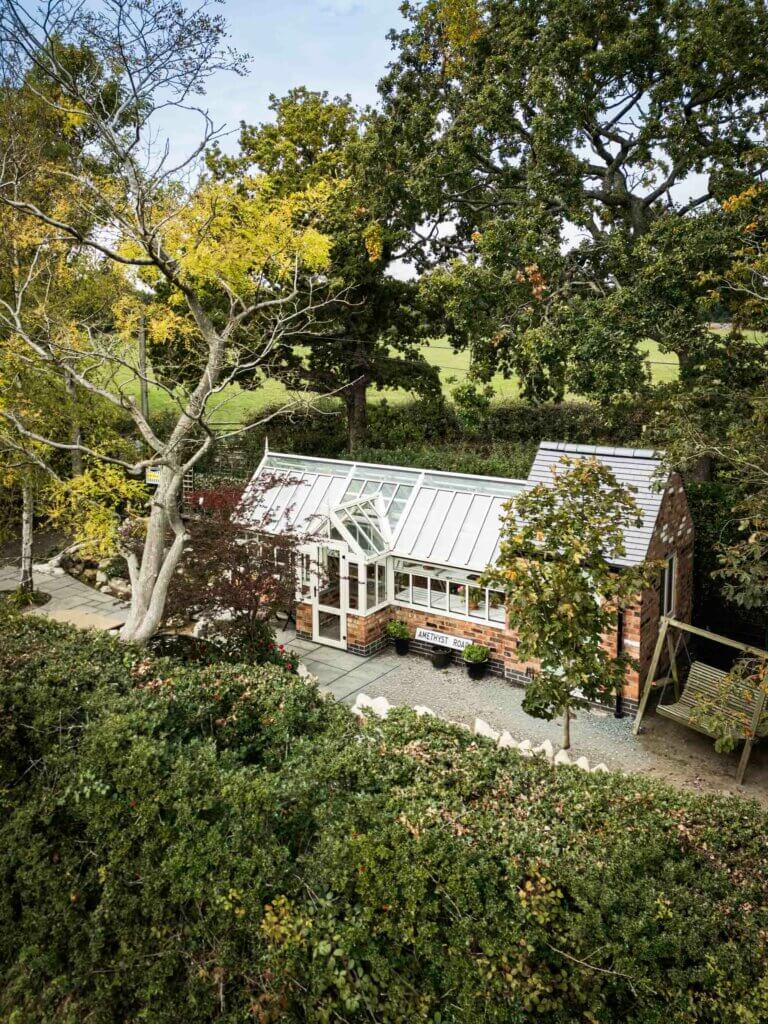
The best size gives enough room for plants, staging, access, and maintenance without making the garden feel crowded.
Yes, finding a suitable standard size is the most sensible and economic decision you can make. Ensure the layout supports the crops you might choose to grow, almost everyone opts for staging. At cultivar we have three standard widths and the lengths are modular so finding one to suit you space should be simple.
Compare what is available on our configurator with the external footprint you have available. Allow room for door access as well as plenty of space internally for your staging layout as well as clearance. Think about how the greenhouse will feel when full.
Often, yes. Plants grow and so will your enthusiasm. Extra space helps provides more opportunity. You can assign areas for seating, partition off areas with a different growing environment or simply grow more plants !
Leave room for installation, cleaning, gutter access, airflow, and maintenance. Avoid placing it tightly against fences or hedges. A couple of foot is advisable.
Frequently Asked Questions
A Cultivar greenhouse is a true investment in your garden and your passion. Here we answer common questions about our expertly crafted designs, precision engineering, and enduring materials. Explore our insights, or begin your journey to create your perfect growing space today.
Design Your Perfect Greenhouse