-
Greenhouses
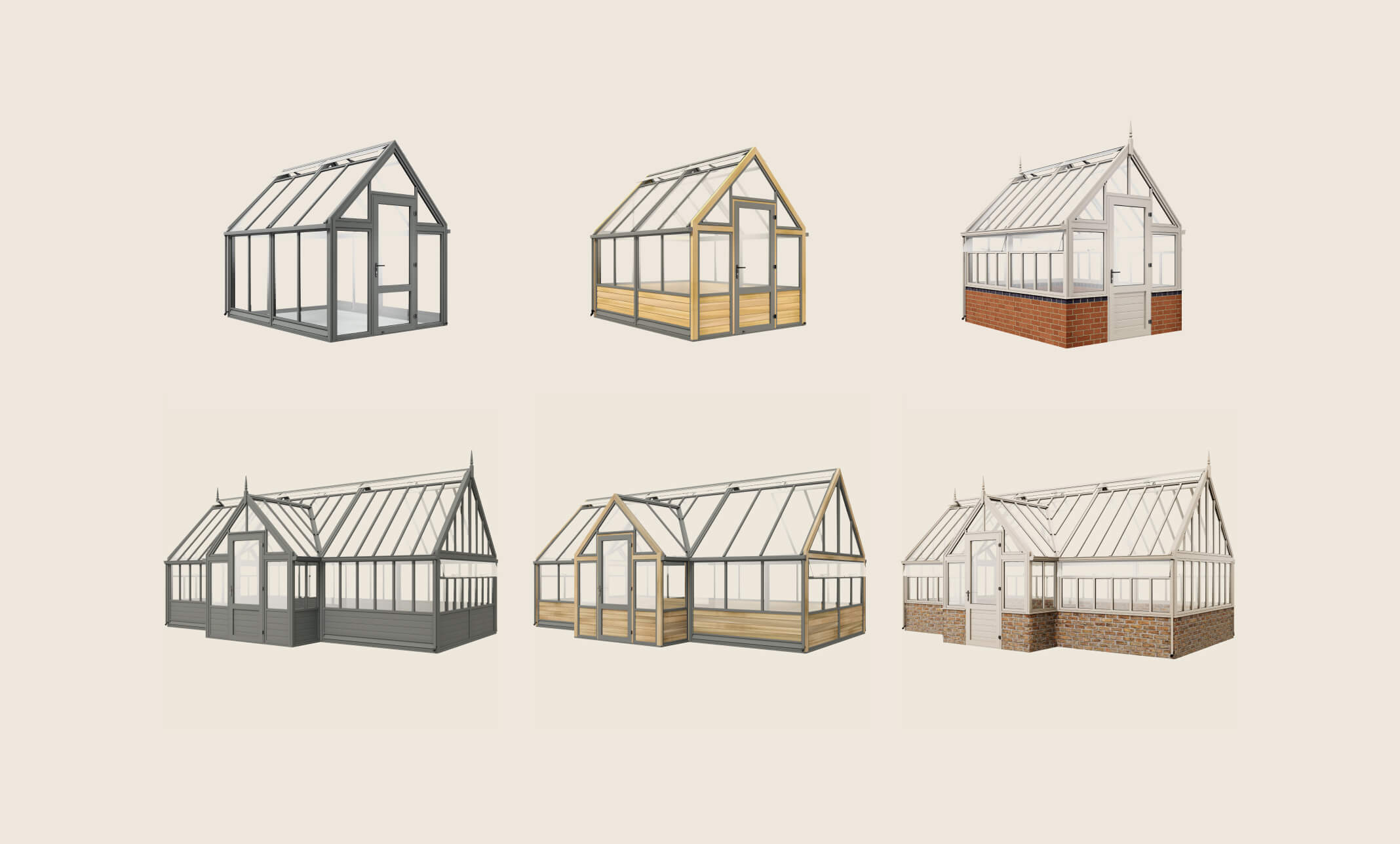
Designed for performance, built for life
From Modern Greenhouses to Traditional Victorian Styles, our range balances form, function, and durability.
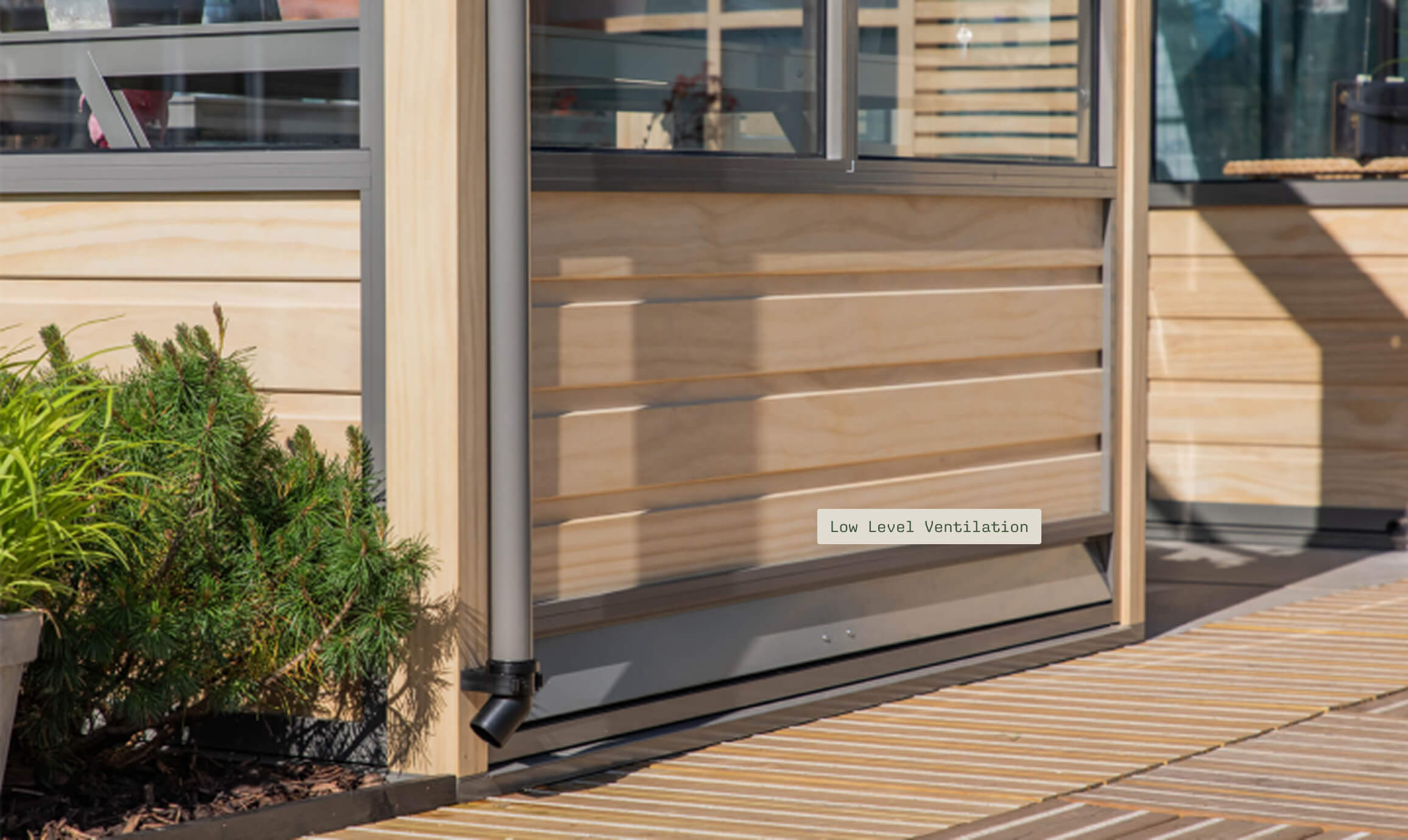
Innovative features for better growing
Explore the innovations that make gardening simpler, smarter, and more enjoyable.
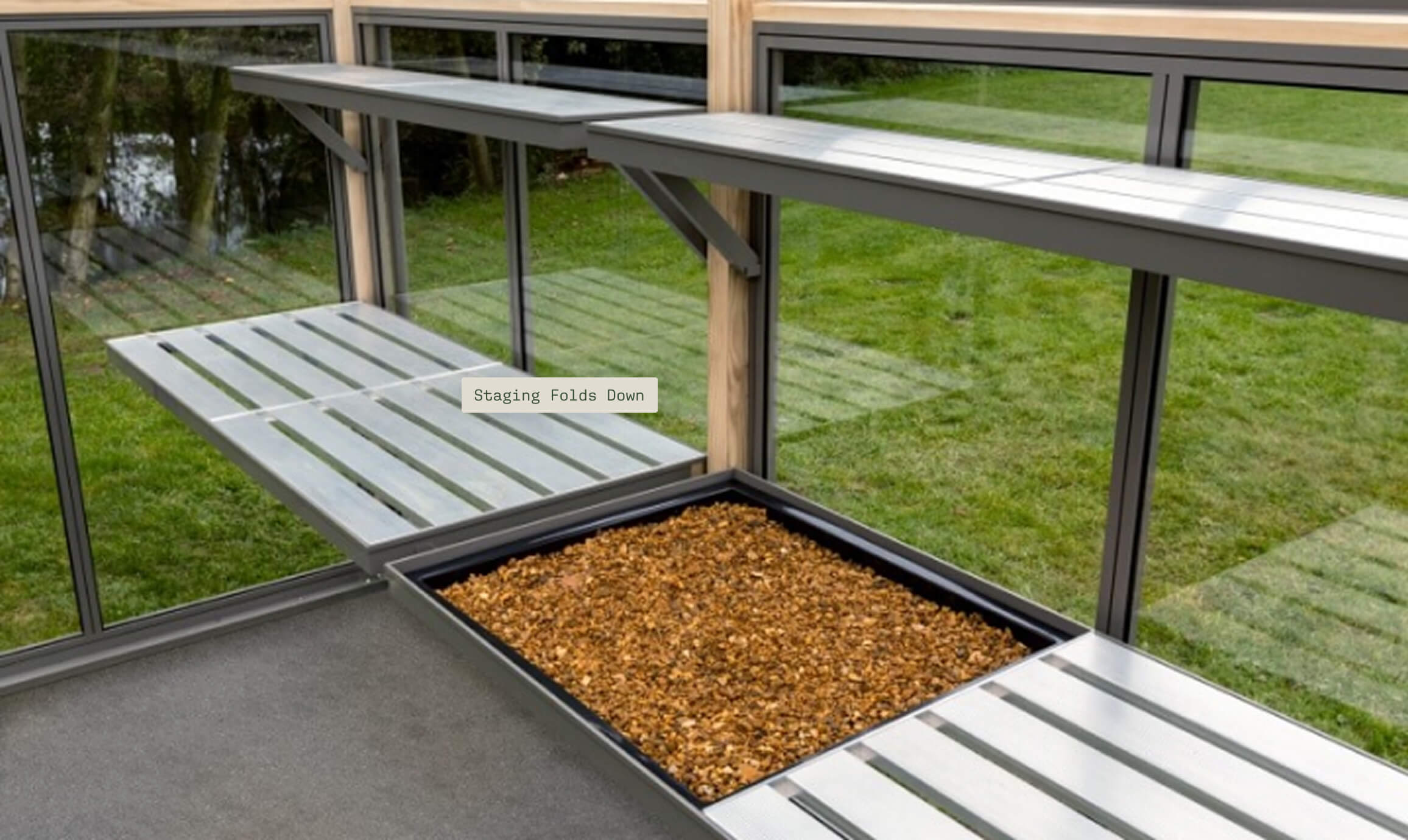
Customise your space with practical additions
Create a more productive space with accessories tailored to your greenhouse.
What does your perfect greenhouse look like?
With our online configurator, you can tailor every detail – from size and style to finishes and accessories. Build a greenhouse that fits your space, your style, and your gardening ambitions.

-
Explore
There’s more to a Cultivar greenhouse than meets the eye.
Explore our buying guide, expert advice, real stories, and meet the team behind the craftsmanship, materials, and thoughtful design features that set us apart.

Designers, makers, and growers at heart
Learn how our team’s experience and care shape every Cultivar greenhouse we build.
Real greenhouses, real gardeners, real stories
See how our greenhouses are used, loved, and lived in by real gardeners.

See what’s possible with a Cultivar greenhouse
Whether for growing, relaxing, or both — here’s some ideas on how to use your greenhouse.
- How It’s Made
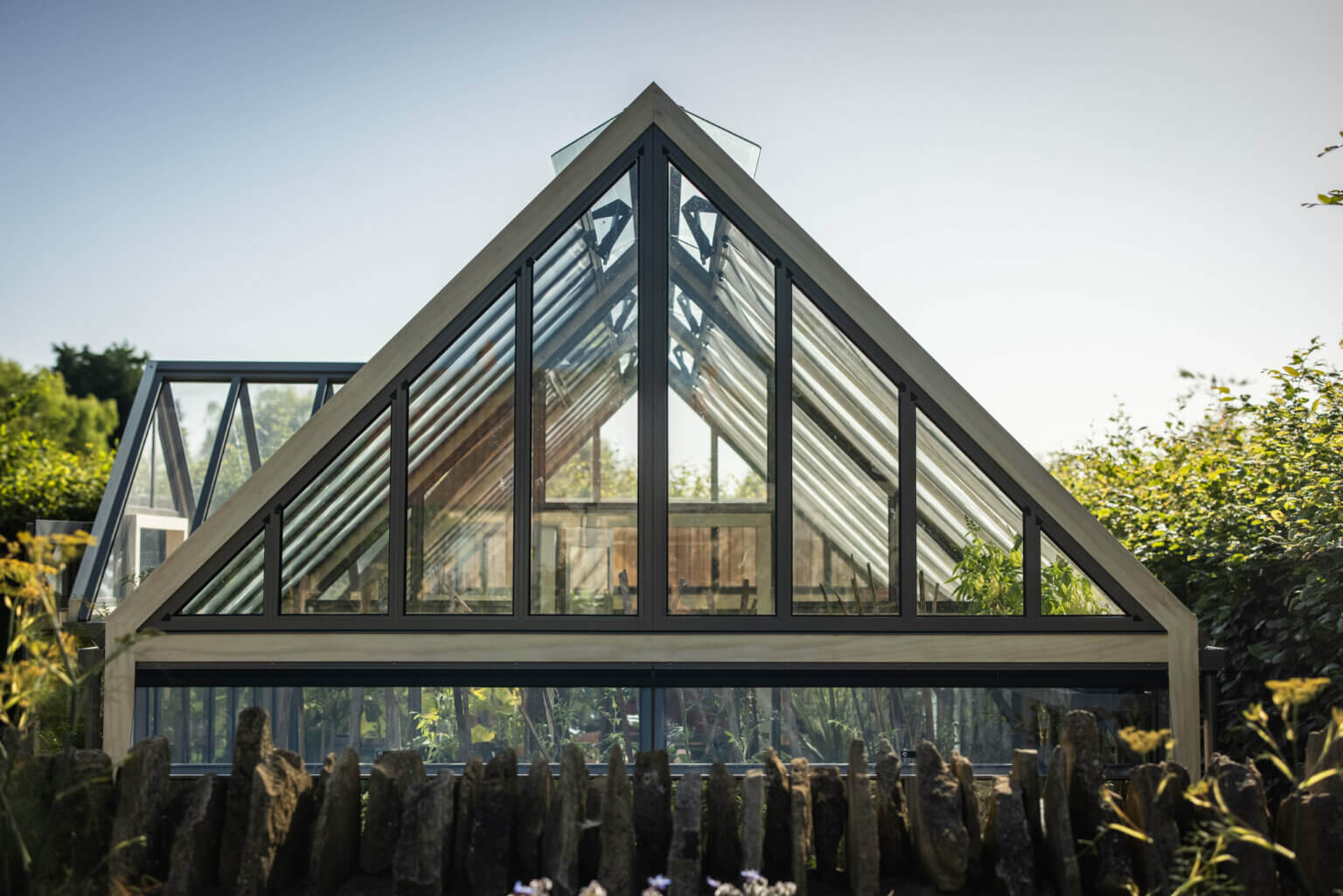

Made Here.
Made Well.
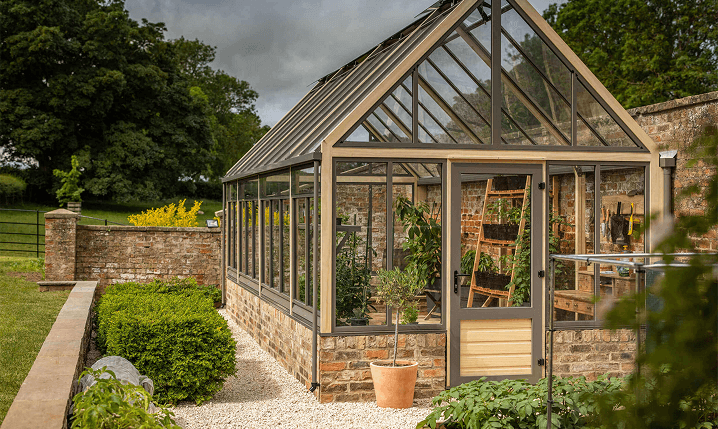
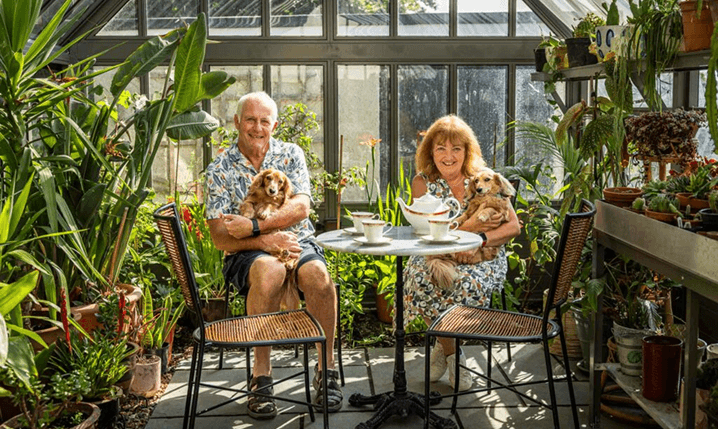
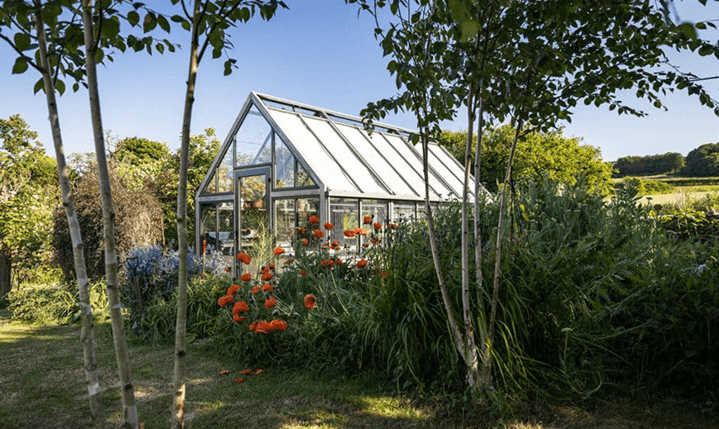
Every Cultivar glasshouse begins as raw material in our North Wales workshop and leaves as something built to last a lifetime.
Where Cultivar Came From
Forty Years Before the First Glasshouse Left the Workshop
Before Cultivar made a single glasshouse, Tim Parry spent twenty years running his own joinery shop and another twenty in the greenhouse trade. When Cultivar was founded, he spent the first three years designing, testing and refining every element — using CAD and a knowledge base built over four decades — before a single structure left the workshop.
Nothing was released until it was right.
That's the standard the workshop is still built around today. It's the reason a Cultivar costs what it does. It's also the reason it lasts.
The Foundation
The Profiles
The aluminium you see in a finished Cultivar glasshouse looks simple. Clean lines, tight corners, nothing out of place. What it doesn't show you is the complexity beneath.
Our aluminium profiles are designed in-house and manufactured to our exact specification. The result of over forty years of refinement and dozens of purpose-designed profiles. Each one is hollow — deliberately so. Fixings, connectors, and structural fasteners run inside the profile itself, giving the finished glasshouse a furniture-quality feel with no exposed fasteners.
Every profile arrives at the workshop pre-powder-coated to architectural standard — applied to BS EN 12206-1 and meeting Qualicoat Class 2 specification. That means a minimum 60-micron coating thickness, independently tested for adhesion, UV resistance, and salt spray durability. Two colours are available: Quartz Grey RAL7039 or Oyster White RAL1013.
The powder coat is applied in a dedicated plant before a single component is cut or drilled — which means the coating is intact on every internal surface, every channel, every rebate. Not just the surfaces you can see.
The cross-section of a Cultivar profile tells the whole story. Every channel, every groove, every interlocking edge has a purpose. Nothing is accidental. Nothing is ordinary.

Extruded aluminium profiles - designed in-house
A Material Philosophy
The Accoya Wood
Not all wood is equal. We chose Accoya for specific reasons, and we haven't deviated from that decision since the day we started.
FSC-certified and non-toxic, Accoya is acetylated to alter its cellular structure, making it dimensionally stable in a way that ordinary timber simply isn't. It doesn't warp. It doesn't expand. It doesn't shrink. The interface between Accoya and aluminium stays true.
It won't rot. There's a 50-year manufacturer's guarantee on the material itself.
Accoya is the only FSC-certified timber used in glasshouse construction at this level. It's a deliberate choice, a material with provenance, certification, and a sustainability story that speaks for itself. We're proud of that.
If you choose the Accoya option, you'll find it in the main structural portal legs, door frames, transoms and boards, and on Victorian models, in the hand-turned finials at the apex.


Hand-turned Accoya finials (Victorian range) and end grain detail
Where Tolerance Matters
Precision Machining
Behind every clean line in a Cultivar glasshouse is a machine working to tolerances most garden buildings never come close to.
Components are cut on double cross-headed saws, each cut set to the exact angle required. Tight mitred corners don't happen by accident. Neither does glass that fits first time, every time.
This is the work that happens before anything is assembled — and it's the work that makes everything else possible.


Double cross-headed saw - loading, cutting, measuring
The Moment It Becomes a Structure
Chevrons & Cleats
The moment a Cultivar glasshouse stops being a collection of components and starts being a structure is when the chevrons and cleats come together.
The cleats are the connectors that locate each glazing bar within the frame — locking the geometry of every glazing panel at exactly the right angle. The chevrons ensure alignment. Together, they create a system of interlocking geometry that means every frame we build is square, true, and consistent — regardless of size or configuration.
You'll never see a chevron from your garden. You'll never think about a cleat. But you'll feel the difference — in glass that sits without tension, and a structure that doesn't move.
Clarity Without Compromise
The Glazing System
We use 4mm toughened safety glass throughout — every panel, every door. For the full-length ridge auto-vents, we use 6mm toughened safety glass, where the additional strength matters.
The way glass meets aluminium in a Cultivar glasshouse is one of the details that separates us from almost everything else on the market. Every pane is held in place with EPDM neoprene gaskets on both sides — gripping the glass firmly, creating a weathertight seal that holds firm through the extremes of any British climate. No rattling. No leaks. No compromise on clarity.
The frames leave our workshop fully assembled — glazing bars in place, gaskets seated, geometry set. On site, they go up cleanly and quickly. The hard work happened in North Wales.
When a customer in Scotland recorded 99mph gusts during Storm Isha in 2024, their newly installed Cultivar took zero damage. The glass and the gaskets are a large part of the reason why.


4mm and 6mm toughened safety glass - EPDM neoprene gaskets on both sides
A System, Not a Vent
The Ventilation System
Most greenhouses have a vent or two added as an afterthought. We designed the entire structure around how air should move through it.
A Cultivar glasshouse uses two coordinated vent runs — one full-length along both sides of the ridge, the other full-length at low level — engineered to work together. Hot air rises and escapes through the roof vents. Cooler air is drawn in at the base. The result is a continuous flow that moves through the full air volume, keeping temperatures stable and conditions right.
The roof vents are frameless — each one a full bay of 6mm toughened glass, bonded to a metal pivot extrusion using high-strength Dowsil structural adhesive. When closed, it sits flush against the bubble gasket below, forming a complete seal. When open, the glass tilts clear and beautiful.
You see the roof vents. That's the point.


Frameless vent glass with Dowsil-bonded pivot extrusion, and low-level opener mechanism
Built Like Furniture
The Door
A sliding door is a garden product. A hinged door is architecture.
Every Cultivar door is built and hung like a quality external door. Heavy-duty aluminium construction with a strong internal cleat system, 180-degree opening on solid hinges, and a high-spec Eurolock as standard.
The door closes onto a continuous EPDM gasket running the full perimeter of the frame - soft on contact, airtight on shut. There is no track on the floor to clean, to trip on, or to fail. Nothing to slide, to stick, to warp, or to rattle in a winter storm.

High-spec Eurolock as standard - with Cultivar key
The Detail Nobody Sees
The Hardware
Most people never think about the fixings inside a greenhouse. We think about them constantly.
Every fastener used in a Cultivar glasshouse is grade A2 stainless steel, chosen not because it's the easiest option, but because it's the right one. Stainless steel doesn't corrode. It doesn't seize. It doesn't leave the rust marks that betray a cheaper build after a few hard winters. Decades from now, if a Cultivar glasshouse ever needs to come apart, every fixing will still turn cleanly.
Our screw room holds the full inventory — sorted, stocked, and counted to specification using calibrated scales. It's not a glamorous part of the process. But it tells you something about how we think.
When nobody's watching, when the detail is hidden inside a sealed profile and nobody will ever see it — we still use the best.


Grade A stainless steel throughout - sorted, counted, ready
Designed In, Not Bolted On
Staging, Shelving & Accessories
Every Cultivar accessory is designed to work with the structure, not just sit inside it. The same aluminium profiles, the same powder-coat finish, the same engineering approach. When you add something to a Cultivar, it looks like it was always there — because in a sense, it was.
The key is the screw port — a continuous groove engineered into every internal aluminium frame. Any accessory can be attached with a screwdriver and the right bracket. No drilling. No damage. Nothing permanent that can't be changed.
The staging itself is fabricated from precision-extruded aluminium slat profiles, each one machined to the same tolerance as every other component in the glasshouse. It folds flat in seconds. Where height is needed for tall growing plants, individual modular slats can be removed — letting you grow from the ground while still using the remaining staging alongside.
Cold frames, roof shading, grow bars, partitions, rainwater diverters, cane caddies, additional shelving — all designed to use the same screw port system, all made from the same materials as the structure itself.
No Two The Same
Made to Order
Our system is built around fixed widths and a modular lengths — the engineering rigour that makes every Cultivar strong, consistent, and right. Within that framework, the choices are yours.
Length, style, finish colour, door hinge side, partitions, accessories — all confirmed before a single component is cut. Your glasshouse goes onto the production schedule as its own build. The materials are cut for it specifically. Each panel assembled for you.

Design yours online - size, style, finish and accessories, all before a single cut is made
The Maker's Eye
The People Who Build It
That standard Tim set lives in the workshop today, carried forward by the people who build every glasshouse.
Tony and Gareth handle the metal cutting and drilling. Dan leads the main assembly. Ruka takes care of glass, the screw room, and staging and shelving. Ethan is dedicated to all Accoya and joinery work. Each one is a specialist in their part of the process.
Daniel Carruthers has spent thirty years talking to gardeners — he'll be the one who answers the phone when you call. Nic Hale keeps the workshop, the orders, and the installations all running on the same clock.
Between them, they bring the same standard to every build, regardless of size, complexity or configuration.


Built by hand - by people who know every part of it
The Final Step
Erected by Experts. Every Time.
When a Cultivar glasshouse leaves our workshop, it goes into the hands of one of our three dedicated fitting teams, specialists who travel the length of the country, and further, to erect our structures to the same standard they were built to.
Every component arrives ready. Nothing needs tweaking, cutting or adjusting on site. The team work through the build methodically, every component familiar, every fixing sequence known. Nothing is left to chance.
After all the careful work in North Wales, the last thing we'd want is for something not to be right because it was put up in a hurry. It never is.
The team who arrives at your garden has done this many times. They know what they're doing, they work methodically, and they will absolutely accept a cup of tea if you're offering.
Fitting team on-site photography to follow
Our fitting teams - the final stage of the same process
The Part Most Companies Don't Talk About
After You Take Delivery
A Cultivar isn't a transaction that ends when the fitting team drives away. The relationship is the longer part.
Daniel still answers the phone in year ten the same way he did in year one. The screw room still stocks every grade A2 stainless steel fastener we've ever used, so if a part is ever needed, the part exists. The Accoya guarantee runs fifty years not as marketing, but because the material genuinely lasts that long when it's looked after, and we'll be here to honour it.
The glasshouse outlasts the customer, and that's how it should be.